耐久性とメンテナンス
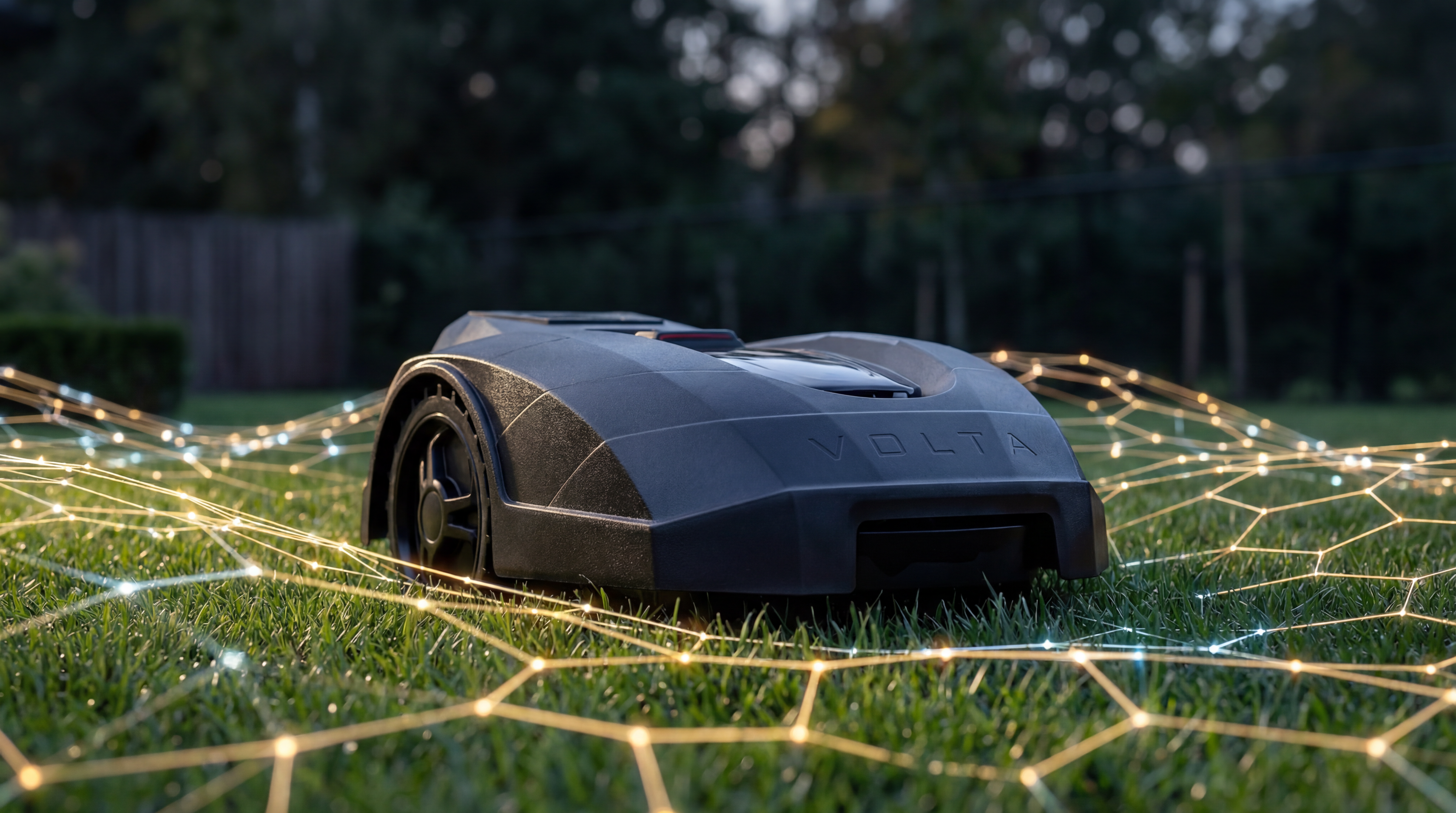
An outdoor robot lives outside. Every material, every mechanism, every algorithm is chosen for multi-year service.
Battery Protection: Longevity by Algorithm
Battery degradation is the primary lifecycle constraint in any outdoor robot. Heat, deep discharge cycles, and charging under adverse conditions accelerate capacity loss. Most robotic mower manufacturers treat battery replacement as a revenue event — a consumable the customer purchases periodically.
Volta's subscription model is structurally different. Under Lawn Care as a Service, Volta sends a free replacement battery when one is needed. Every battery failure is a cost to Volta, not a sale. This creates a direct financial incentive to maximize battery lifespan.
Adaptive Battery Management
The Lawn Companion uses battery protection algorithms that adapt to real-world operating conditions rather than following fixed charge/discharge profiles. The system monitors work cycles, charge state, temperature trends, and thermal history to optimize charging behavior and mowing schedules for battery longevity.
Thermal Inhibition
When direct sunlight raises internal temperature above safe thresholds, the Lawn Companion inhibits operation — it will not mow or charge until thermal conditions return to acceptable levels. This protects both the battery cells and the user.
Many competing products do not implement thermal inhibition and will continue operating in conditions that accelerate battery degradation. Volta prioritizes long-term battery health over short-term mowing uptime.
Built to Resist
ASA Polymer Shell
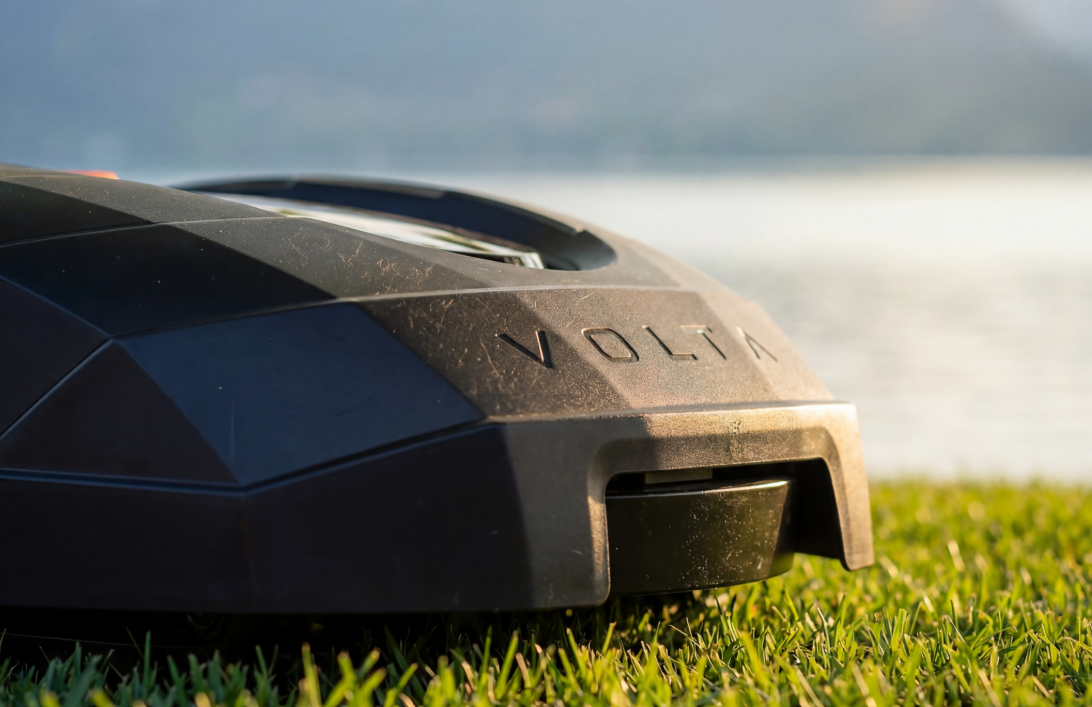
Standard ABS plastics — commonly used in consumer electronics and many robotic mowers — yellow, fade, and become brittle under prolonged UV exposure. The Lawn Companion's exterior shell is manufactured from ASA (Acrylonitrile Styrene Acrylate) — a material engineered specifically for long-term outdoor UV exposure.
ASA maintains color stability and mechanical properties under sustained sunlight far longer than ABS. Volta's black remains black. Volta's red remains red. The material does not yellow, chalk, or become brittle through normal outdoor service life.
ASA is the same polymer class used in automotive exterior trim, outdoor signage, and building facades — applications where multi-year UV exposure is a baseline requirement.
Scratch-Resistant Aesthetics
An outdoor robot will be scratched — contact with branches, stones, garden furniture, and normal operation guarantees surface marks over time. The Lawn Companion uses a matte finish rather than a glossy one. A scratch on a gloss surface creates a visible disruption of the reflective layer; the same scratch on a matte surface is far less perceptible because the surface already diffuses light uniformly.
The Lawn Companion is designed to look good when new and to age gracefully through years of outdoor service.
Camera Protection: Structure, Not Glass
The downward-facing camera operates centimeters from the ground, in constant proximity to grass, soil, moisture, and debris. A glass cover over the lens seems like an obvious solution, but it introduces its own problems: reflections, reduced light transmission, condensation between surfaces, and the glass itself can become scratched or cracked.
Volta's approach is different. The camera sits recessed inside a V-shaped niche in the underside of the hexoskeleton shell. This structural recess shields the lens from direct contact with ground debris, branches, and stones. Objects that contact the robot's underside strike the surrounding shell structure before they can reach the lens.
Protection by placement — using geometry and structure rather than added components.
Wheels Designed for a Lawn
Many premium robotic mowers use omnidirectional corrugated-bellows wheels. On a product demo floor they are impressive. On a real lawn, they are a maintenance liability.
- Corrugated channels trap wet grass, mud, and soil
- Passive rollers seize when clogged, traction degrades
- Users report frequent manual cleaning and robots creating ruts
Volta's Approach
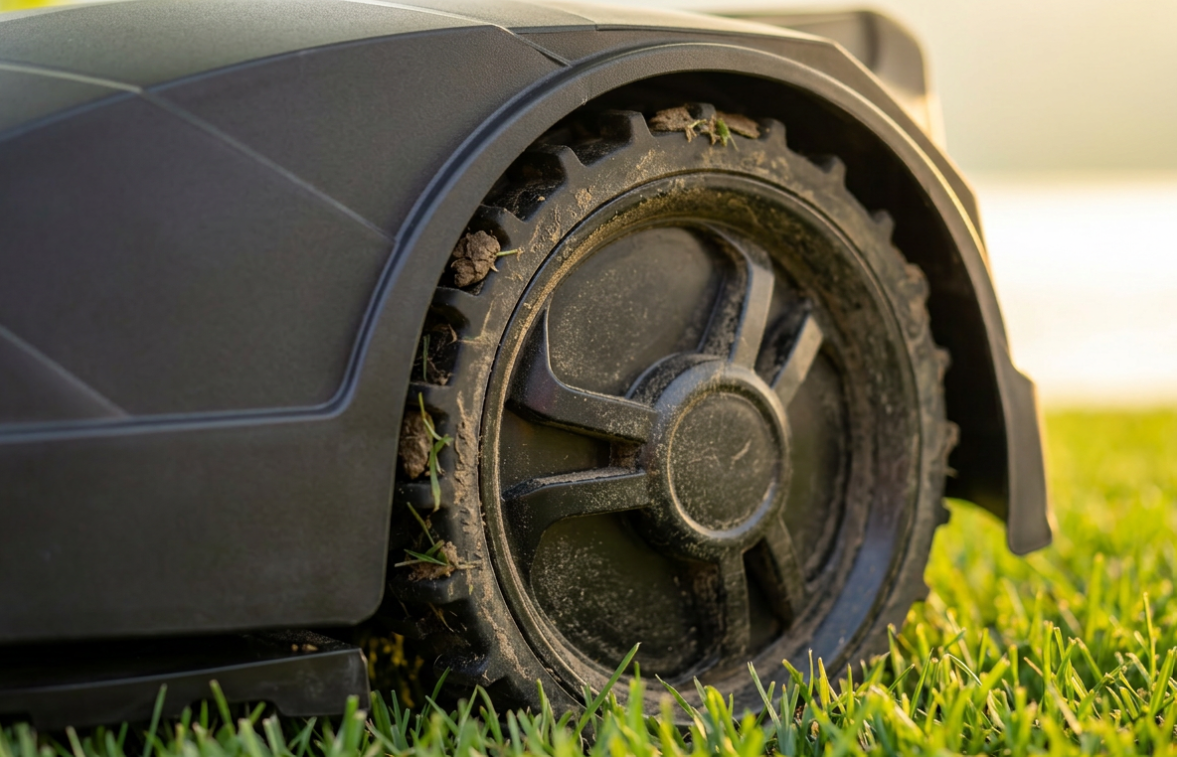
The Lawn Companion uses conventional drive wheels — fully enclosed within the floating hexoskeleton — and a simple rear ball caster for passive steering. No corrugated channels. No passive roller mechanisms. No gaps where debris accumulates.
The ball caster is a freely rotating sphere that allows smooth directional changes. Mud, wet grass, and soil contact the smooth surface and fall away rather than packing into crevices. The system performs identically whether the lawn is dry, damp, muddy, or freshly irrigated.
This is a deliberate tradeoff: the Lawn Companion does not offer omnidirectional lateral movement on dry surfaces. What it offers instead is consistent, maintenance-free locomotion in every condition a residential lawn presents.
Base Station: Engineered for Abuse
The charging base lives outdoors permanently — exposed to weather, foot traffic, garden activities, and incidental impact.
- Two solid full-metal cylinders as structural core and charging contacts
- Withstands stepping, jumping, or garden equipment impact
- 32V DC contacts — safe by design, below hazardous threshold
No Roof Required
The base station is designed for permanent outdoor exposure without a protective shelter. No garage, canopy, or roof structure is needed. The base tolerates direct rain, sprinkler systems, and flooding irrigation without damage. This simplifies installation — the base goes wherever the lawn needs it.
Maintenance: Simple and Infrequent
Razor Blade Replacement
The Lawn Companion uses replaceable razor blades — small, lightweight blades that cut grass by slicing rather than tearing. Because they are light, they carry minimal kinetic energy, allowing rapid stopping when the safety system triggers a blade halt.
A sharp blade produces a clean cut that heals quickly, promoting turf health. A dull blade tears the grass tip, causing browning and moisture loss. Replacement is a simple, tool-free operation on the underside of the robot.
Under Lawn Care as a Service, replacement blades are included in the subscription — delivered on a schedule matched to expected wear rates.
Cutting Disk Replacement
The cutting disk carries the razor blades and lasts through many blade replacement cycles. When mounting points show wear or the disk is damaged by impact, it can be replaced with a standard screwdriver. No proprietary tools, no factory calibration.
The disk also serves as a sacrificial protection element: when the blade assembly strikes a hard object, the disk absorbs portion of the impact energy, protecting the more expensive motor and drivetrain from damage.
Screwdriver-Serviceable
The entire Lawn Companion can be disassembled, inspected, and reassembled using a standard screwdriver and a hexagonal key. No proprietary tools, no adhesive seals that must be broken, no components that require factory service to access.
- Battery — accessible without specialized equipment
- Wheels — individually replaceable, conventional design
- Shell panels — individually serviceable after impact damage
- Blades and disk — tool-free or minimal-tool replacement
Repairability is a durability strategy. A robot that can be easily repaired stays in service longer. Components that wear should be replaceable without replacing the machine. The Lawn Companion is designed so that repair extends its life rather than being a reason to purchase a replacement.
Durability as Business Model
The thread connecting all of these decisions is a single structural fact: Volta's Lawn Care as a Service model makes durability profitable.
When a manufacturer sells robots, every failure is a potential warranty cost or a replacement sale. The incentive is ambiguous — longer-lasting products reduce repeat revenue. When a manufacturer operates robots as a service, every failure is a pure cost with no offsetting revenue. The incentive is unambiguous: build it to last as long as possible.
This is why Volta invests in adaptive battery algorithms instead of selling replacement batteries. It is why the shell is ASA instead of cheaper ABS. It is why the finish is matte instead of glossy. It is why the camera is protected by structure instead of an added glass layer. It is why simple wheels replace complex omnidirectional mechanisms. It is why every component is screwdriver-accessible. It is why replacement blades are included in the subscription.
Durability is not a feature. It is a consequence of the business model.