What's the battery life?
The Li-ion battery (2 Ah, 28V) provides sufficient runtime to cover up to 1,000 m² (~11,000 sq ft) per session. The ~1:1 charge-to-discharge ratio means for every hour of charging, the robot operates approximately one hour. Thermal inhibition protects long-term battery health.
What if the robot doesn't charge?
Check the base station power supply and cable connections. Clean the charging contacts on both the robot and the base. If the robot shows "No Current," undock and re-dock it straight — poor alignment is the most common cause. If charging does not resume in extreme temperatures, the thermal inhibition system is protecting the battery and will resume when safe.
Can I service the robot myself?
Yes. Every serviceable component — battery, wheels, shell panels, blades, and cutting disk — is accessible with a single standard screwdriver. No adhesive bonds, no ultrasonic welds, no proprietary tools. For issues beyond basic maintenance, Volta provides remote support, and authorized local dealers handle hardware service.
Does the base station need a roof or shelter?
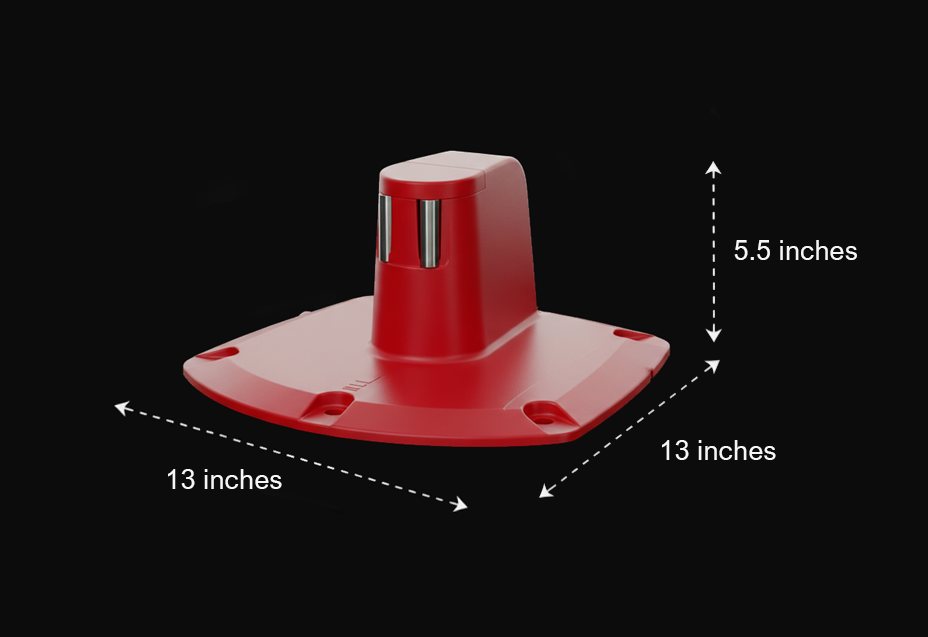
No. The base station carries an IP68 rating and is designed for permanent outdoor exposure without any protective structure. Integrated drainage, sealed joints, and ASA construction withstand freeze-thaw cycles, UV exposure, and rain. It supports up to 200 kg of vertical compression.
How loud is the robot?
The Lawn Companion operates at 60 dB — roughly the level of a normal conversation. This is significantly quieter than traditional gas mowers (90+ dB) and makes evening or weekend mowing perfectly viable without disturbing neighbors.
How big and heavy is the robot?
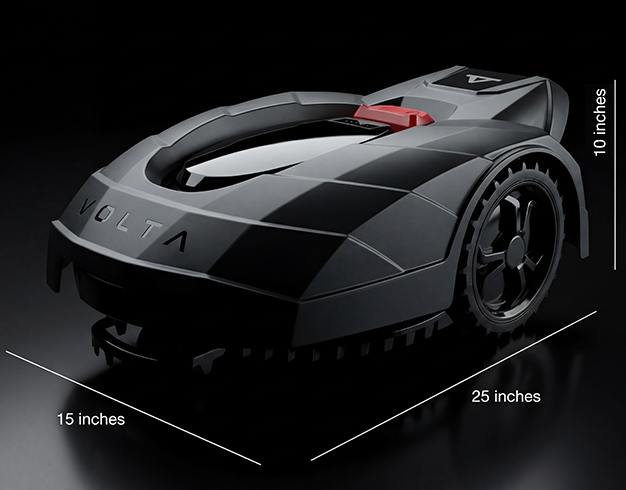
The Lawn Companion measures 25″ × 15″ × 10″ (63.5 × 38 × 25.4 cm) and weighs 19.5 lbs (8.8 kg). Light enough to carry with one hand.
What is the hexagonal design about?
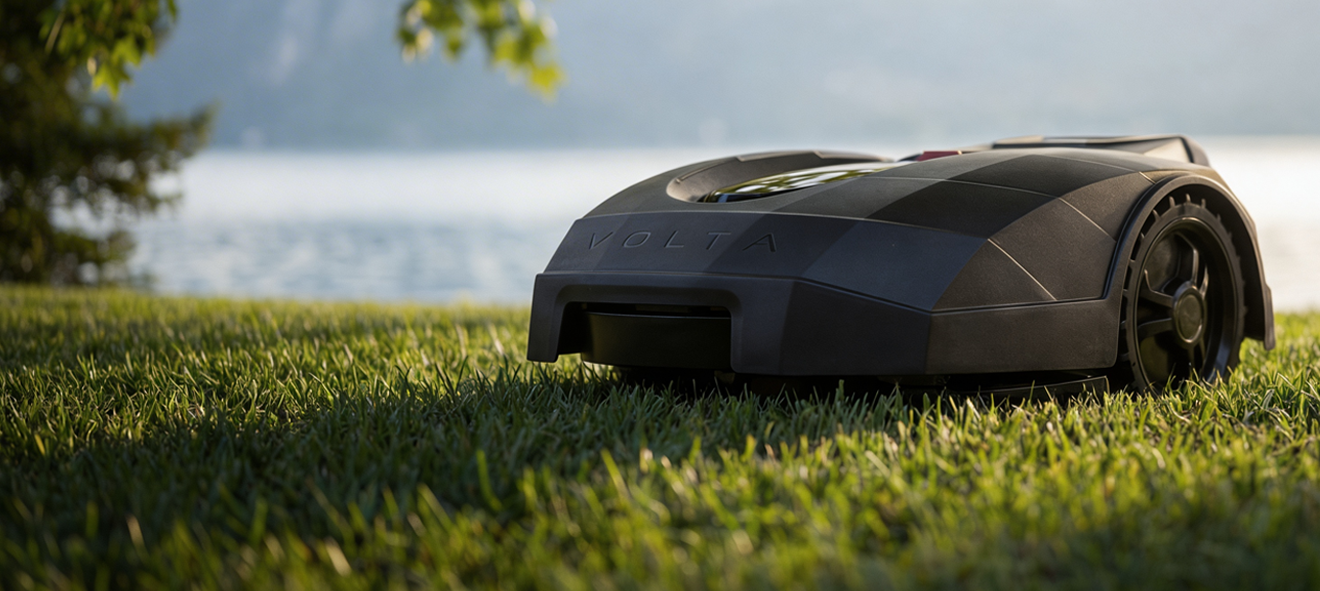
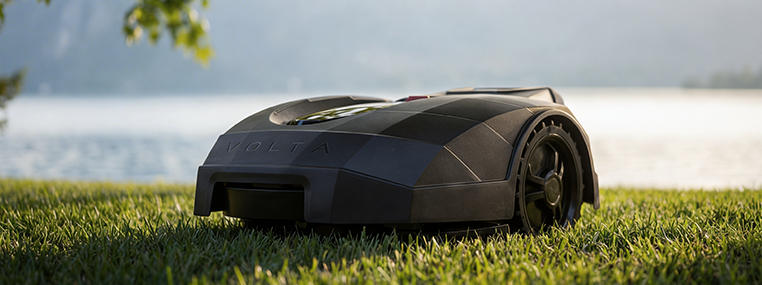
The hexagonal shape serves three structural purposes: equal safety margin from the centered blade in all directions, omnidirectional contact detection via the floating hexoskeleton, and enclosed wheels that prevent debris wrapping and entanglement hazards.
What is Lawn Intelligence?
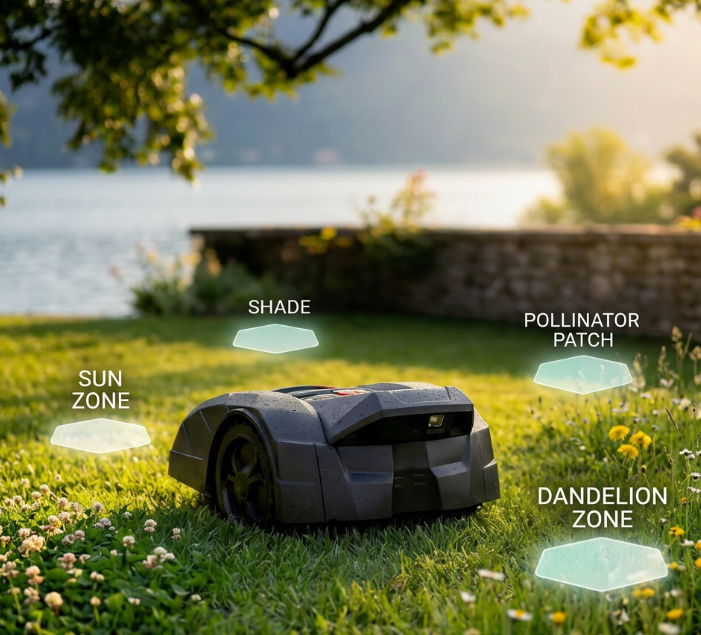
Lawn Intelligence is Volta's core AI platform. It combines spatial precision (Uber H3 hexagonal grid), continuous learning (per-lawn data from every mowing session), and fleet intelligence (collective knowledge from all Volta robots) to treat each lawn as a living system.
The robot shows "Tilted" or "Lifted" on flat ground — what's wrong?
This is usually caused by damaged, missing, or grass-clogged blades creating excessive vibration. Check and replace the blades. Severe slopes or uneven terrain can also trigger these alerts.
The robot won't undock — what should I do?
Check for obstacles around the base station and ensure the wheels have adequate traction. Clean the wheels of mud or grass buildup. If stuck, move the robot to the lawn, press STOP, then press the blue button twice to restart it.
The blue LED is flashing fast — what does it mean?
Fast blue flashing indicates failsafe mode. Press the blue button on the robot twice to restart. If the LED flashes slowly, the robot is restarting — wait and do not turn it off.
The camera lens has condensation — is this a problem?
No permanent damage occurs. The robot may pause operation until the condensation clears naturally. If the robot fails to dock or stops near the base station, gently clean the camera lens. Condensation is temporary and weather-dependent.
The robot has trouble crossing a path — how do I fix it?
Verify the crossing length in the app (maximum 6 meters). Ensure start and end points have clear grass and that the path is flat and obstacle-free. Check that wheels are clean and not slipping. If the crossing is near a geofence edge, widen the geofence. For difficult crossings like driveways, register multiple paths in different spots.
The robot can't find its way back to the base station.
This is normal during the first few days while the spatial map is still being built. Carry the robot back to the base manually. Once mapping is complete (typically 2–3 days), autonomous return-to-base works reliably. If the issue persists after the learning period, ensure the base station is visible and not hidden by tall grass.


 AI
AI